

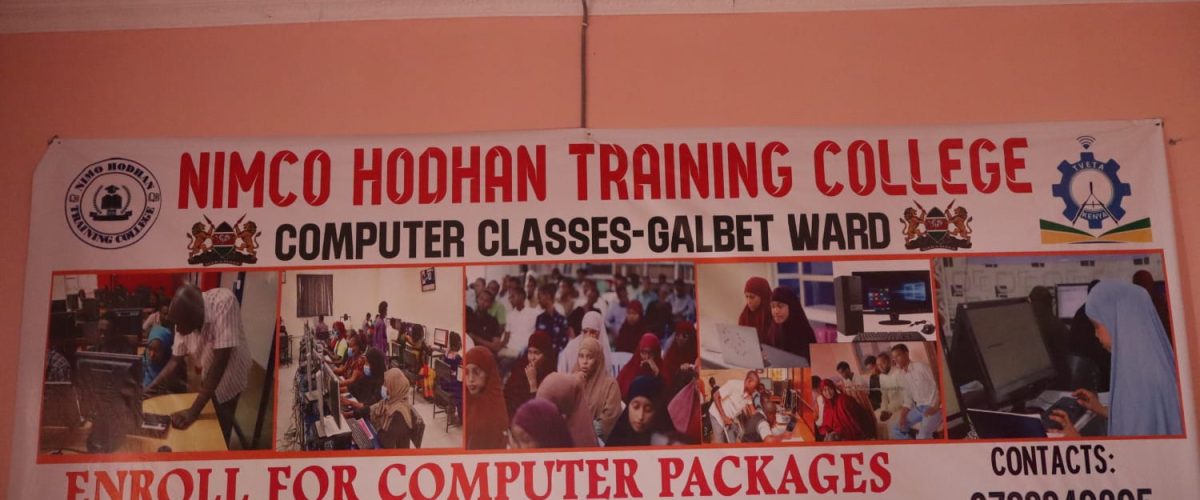
Nimco Hodhan Training College is supporting efforts to expand access to practical skills development in Garissa County, with a focus on digital literacy, culinary skills and competencies that can contribute to employment and entrepreneurship.
The TVETA-registered private training centre, located in Galbet Ward, provides vocational training designed to equip learners with practical knowledge relevant to everyday life and the changing demands of the labour market.
Its ICT programme provides learners with foundational digital competencies, including computer packages, typing, Microsoft Word, Excel, PowerPoint, Access and Publisher. The programme also introduces learners to data security, internet use and basic networking.
The institution also provides practical culinary training, enabling learners to develop skills in food preparation through hands-on instruction and exposure to a range of everyday recipes and cooking techniques.
Nimco Hodhan, Director of Nimco Hodhan Training College, said the institution’s approach is centred on making practical skills accessible to members of the local community.
“Our focus is to provide practical skills that respond to the needs of our community and give learners an opportunity to improve their livelihoods,” Hodhan said.
She emphasised the importance of equipping young people with competencies that can support multiple pathways, including further education, employment and self-employment.
“We want our students to leave here with skills they can use in their daily lives, pursue employment or use to start their own income-generating activities,” she said.
Hodhan noted that digital literacy has become increasingly important as technology continues to influence education, public services, business and employment.
“Computer skills are no longer optional. Young people need to understand how to use technology effectively, whether they want to work, run a business or continue with further education,” she said.
The institution’s programmes contribute to broader efforts to strengthen access to skills development at the community level, particularly for young people seeking practical competencies that can enhance their participation in the local economy.
Hodhan said the college intends to continue strengthening partnerships and improving its learning environment to respond to the evolving needs of learners.
“We will continue working with relevant partners and the community to expand access to training and create a better learning environment for our students,” she said.
The college has also facilitated access to essential public services for its students. In a recent exercise, a National Registration Bureau team visited the institution to register eligible learners and issue national identity cards.
Hodhan said bringing such services closer to students helps reduce barriers to accessing government services while strengthening institutional records.
“We are grateful to the registration team for bringing this service closer to our students. The national ID cards will help us improve our records and make it easier to identify our students as Kenyan citizens,” she said.
She added that the institution would continue engaging relevant stakeholders to strengthen services available to learners.
The college combines vocational education with supportive services that enable learners to participate more effectively in social and economic life.
The centre continues to contribute to local skills development by providing accessible, practical and community-oriented training opportunities.