
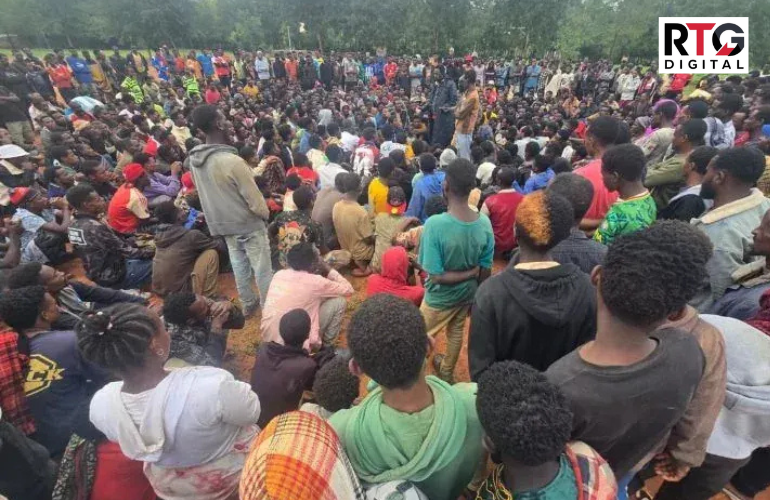
The Kenya National Commission on Human Rights (KNCHR) has called for urgent humanitarian assistance after approximately 40,000 people reportedly crossed into Moyale, Marsabit County, fleeing unrest in neighbouring Ethiopia.
The commission warns that the growing influx was placing pressure on host communities and available resources, with concerns over access to food, clean water, shelter, sanitation and healthcare.
According to KNCHR, more than 15,000 people were reportedly accommodated in eight temporary shelters, while over 20,000 others were staying with relatives and friends. The reported locations include St. Mary’s Catholic Church, Harhosha Secondary School, Manyatta Burji, Sessi and Lanzi Mosque Hospital.
The commission said rainy weather in the Moyale area could worsen living conditions and increase the risk of communicable diseases, particularly in crowded shelters with limited sanitation facilities.
Maternal healthcare needs emerge
KNCHR also raised concern over urgent medical needs among the displaced population, reporting that four women had given birth at different locations, including Manyatta and Bitiye.
The commission called for the deployment of medical teams and supplies to provide emergency treatment, maternal and newborn healthcare, immunisation, nutrition support and disease surveillance.
The Ministry of Health and the Marsabit County Government were urged to coordinate healthcare services across affected locations.
Government urged to coordinate humanitarian response
The commission called on the national government and the Department of Refugee Services to coordinate the reception, registration, documentation and protection screening of people arriving in Moyale.
It also urged disaster management authorities to conduct rapid needs assessments and organise the distribution of food, clean water, weather-appropriate shelter, sanitation supplies and other essential assistance.
KNCHR appealed to the United Nations High Commissioner for Refugees (UNHCR), the International Organization for Migration (IOM), the Kenya Red Cross and other humanitarian partners to mobilise emergency resources based on assessed needs.
The commission emphasised that assistance should reach both people living in temporary shelters and those hosted by families in the community.
Human rights and border protection
KNCHR reminded authorities that everyone within Kenya’s jurisdiction is entitled to dignity and protection under the law, regardless of nationality or immigration status.
It cited Articles 28 and 21(1) of the Constitution of Kenya, which provide for the protection of human dignity and oblige the State to uphold the rights contained in the Bill of Rights.
The commission further called for lawful and non-discriminatory border management, stressing that the principle of non-refoulement must be respected. The principle prohibits returning people to places where they face persecution or other serious harm.
It urged Kenyan and Ethiopian authorities to strengthen cooperation in managing cross-border movements, addressing the causes of displacement and pursuing lasting solutions to the unrest.
KNCHR also called for protection measures targeting women and girls at risk of violence, unaccompanied children, older people, persons with disabilities and other vulnerable groups.
The commission said security operations should remain lawful and proportionate, while ensuring that security screening does not obstruct access to humanitarian assistance.
The situation was reported to be calm on both sides of the border as of the morning of October 27, according to the commission’s statement.
RTG Digital | News From Garissa and Beyond