

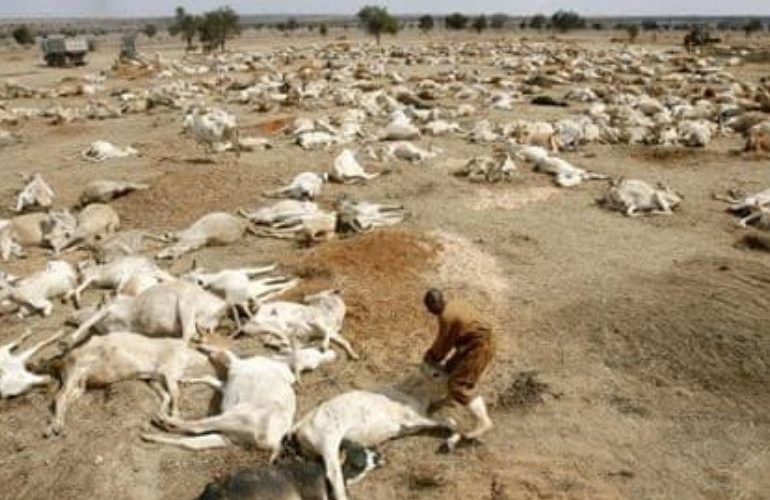
Kenya’s food insecurity crisis is expected to deepen in early 2026, with the number of people facing acute hunger projected to rise from 1.76 million to 2.12 million as prolonged drought continues to affect Arid and Semi-Arid Lands (ASALs), according to a new humanitarian report.
The 2025 East Africa Humanitarian and Emergency Affairs Report by World Vision warns that worsening climate conditions, disease outbreaks and funding shortages are placing increasing pressure on vulnerable communities and the country’s already stretched health system.
The report says prolonged drought, coupled with intermittent flooding, has left millions struggling to access food and clean water, while recurring disease outbreaks continue to threaten lives across affected regions.
Children remain among the hardest hit. An estimated 741,000 children under the age of five are suffering from acute malnutrition, while another 109,000 pregnant and breastfeeding women also require urgent nutritional support.
Health services are facing mounting pressure as outbreaks of cholera, malaria and Rift Valley fever compound the humanitarian crisis. The report notes that limited resources have reduced the ability of health facilities to respond effectively, particularly in remote ASAL counties where access to healthcare remains a challenge.
Kenya is also continuing to shoulder one of Africa’s largest refugee populations, hosting around 850,000 refugees. Humanitarian agencies warn that funding cuts have resulted in reduced food rations and deteriorating living conditions in refugee camps despite efforts to implement the government’s Shirika Plan aimed at integrating refugees into host communities.
During the 2025 financial year, World Vision Kenya responded to flooding and landslides while supporting refugee operations in Kakuma Refugee Camp. The organisation said it reached approximately 188,000 people through its emergency response, including more than 154,000 refugees.
The report places Kenya’s humanitarian situation within a broader regional crisis. Across East Africa, humanitarian needs continue to rise because of conflict, climate shocks, disease outbreaks and economic hardship, even as international funding records its steepest decline in recent years.
Humanitarian organisations are urging governments, donors and development partners to increase investments in early warning systems, disaster preparedness and climate resilience to reduce the impact of future emergencies. The report argues that anticipatory action—responding before disasters escalate—can save lives, protect livelihoods and lower the cost of humanitarian response.
With weather forecasts pointing to continued climate uncertainty and humanitarian resources under increasing strain, aid agencies warn that without sustained intervention, more Kenyan families could face worsening hunger and malnutrition in the months ahead.