
The history of Kenyan Somalis is deeply rooted in the Horn of Africa, where generations of pastoral communities developed social, cultural and economic ties across territories that are today divided by international borders.
Long before Kenya gained independence in 1963, Somali communities inhabited the northern and northeastern parts of the country, maintaining livelihoods centred on livestock keeping, trade and cross-border interaction with neighbouring communities in present-day Somalia and Ethiopia.
Their history is intertwined with the development of the Somali people across the Horn of Africa, as well as the colonial policies that shaped the boundaries and administration of modern Kenya.
Origins and migration
The Somali people are indigenous to the Horn of Africa, a region encompassing present-day Somalia, Djibouti, parts of Ethiopia and northeastern Kenya.
For centuries, Somali pastoralists moved across these territories in search of water and pasture, following seasonal patterns that supported livestock keeping in the region’s arid and semi-arid environment.
These movements predated the establishment of modern international borders, meaning that communities sharing language, clan relationships, religious traditions and economic interests could live across territories that later became part of different countries.
In present-day Kenya, Somali communities became particularly established in the areas now known as Garissa, Wajir and Mandera counties.
Their presence in these areas was not primarily the result of the Somali civil war that began in 1991. Rather, Kenyan Somalis have longstanding historical roots in the region, while later decades of conflict and displacement brought additional Somali refugees into the country.
Colonial rule and the Northern Frontier District
The arrival of British colonial rule fundamentally altered the political landscape of northern Kenya.
Colonial authorities incorporated predominantly Somali-inhabited territories into the administrative arrangements of British East Africa, eventually designating much of the region as the Northern Frontier District (NFD).
The district covered areas that broadly correspond to parts of present-day northeastern Kenya and was home to predominantly pastoral communities whose livelihoods depended on mobility across extensive grazing lands.
The colonial administration faced difficulties establishing effective control over the region because of its geographical distance from Nairobi, the mobility of pastoral communities and resistance to colonial authority.
For many Somali communities, cultural and social ties extended beyond the boundaries imposed by colonial governments. These connections influenced their attitudes towards political arrangements that separated Somali-inhabited territories from neighbouring Somali communities.
The Shifta conflict and the question of self-determination
As Kenya approached independence, the political future of the Northern Frontier District became a major source of tension.
Many Somali residents supported the idea of joining the Somali Republic, which had gained independence in 1960, rather than remaining within an independent Kenya.
The question became a defining issue during the transition to independence.
A 1962 regional referendum, commonly associated with the NFD’s political future, demonstrated substantial support for joining Somalia among those who participated. However, the British government did not implement the outcome as supporters of union had hoped.
Kenya became independent on December 12, 1963, with the predominantly Somali-inhabited northeastern territories remaining within its borders.
The dispute subsequently contributed to the Shifta conflict, an armed secessionist insurgency that intensified between 1963 and 1967.
The Kenyan government responded with security operations and emergency measures. The conflict and its aftermath had far-reaching consequences for local communities, affecting livelihoods, security and relations between residents and the state.
The period remains an important chapter in the history of Kenyan Somalis and their relationship with the national government.
Independence, marginalisation and the search for recognition
Following independence, residents of the former Northern Frontier District experienced decades of political, economic and security challenges.
The region’s remoteness from the country’s main administrative and economic centres contributed to limited infrastructure development and restricted access to public services.
During the Shifta conflict and subsequent security operations, communities experienced restrictions on movement, disruptions to pastoral livelihoods and strained relations with state authorities.
The 1984 Wagalla massacre in Wajir County became one of the darkest episodes in the region’s history. Hundreds of people, predominantly members of the Degodia Somali community, were killed during a security operation. The exact death toll remains disputed, but the massacre continues to shape discussions about accountability, human rights and historical justice in northeastern Kenya.
These experiences contributed to longstanding demands for equal citizenship, improved public services, political representation and recognition of the region’s historical grievances.
The 2010 Constitution and devolution
The promulgation of Kenya’s 2010 Constitution marked an important turning point in the country’s governance structure.
The establishment of county governments under devolution created new opportunities for local communities to participate in decision-making and influence the allocation of public resources.
Garissa, Wajir and Mandera became independent county administrative units under the devolved system, with elected governors, county assemblies and local development responsibilities.
Although challenges involving infrastructure, healthcare, education, water access and security remain, devolution has expanded the institutional space for local leadership and community participation.
The region’s political and economic landscape has also continued to evolve, with growing engagement in trade, education, public service and entrepreneurship.
From northeastern Kenya to national prominence
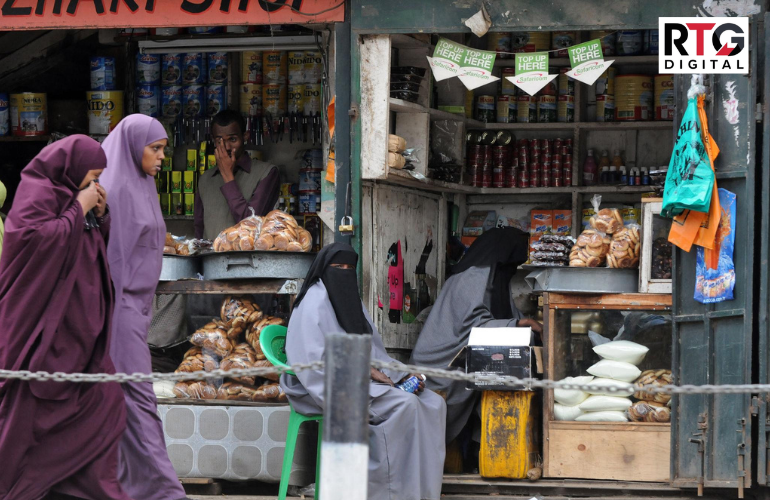
Over the decades, Kenyan Somalis have established a significant presence beyond their ancestral areas, particularly in Nairobi’s Eastleigh neighbourhood, which has developed into an important commercial hub.
Eastleigh’s growth reflects the community’s expanding role in trade, transport, real estate and other business sectors. Its markets connect Kenya with regional and international commercial networks, attracting traders and customers from across East Africa and beyond.
Kenyan Somalis have also made contributions to politics, education, healthcare, media, public administration and civil society.
At the same time, the community continues to maintain strong linguistic, cultural and religious traditions, with Islam and the Somali language remaining central elements of its identity.
The growth of the community’s presence across Kenya demonstrates that Somali identity and Kenyan citizenship are not mutually exclusive. Many Kenyan Somalis maintain family and cultural connections across international borders while participating fully in the country’s political, economic and social life.
A history shaped by borders, identity and belonging
The history of Kenyan Somalis cannot be understood solely through migration or the arrival of refugees from neighbouring Somalia.
It is a broader story of an indigenous community whose historical settlement in the Horn of Africa predates modern national boundaries, whose political aspirations became a central issue during Kenya’s independence negotiations, and whose relationship with the state has been shaped by conflict, marginalisation and subsequent constitutional reforms.
Today, Kenyan Somalis remain an integral part of the country’s social, political and economic fabric.
Understanding their history is essential not only to appreciating the diversity of Kenya’s population but also to recognising the historical experiences that continue to influence debates about citizenship, identity, development and national belonging.
For northeastern Kenya, this history remains more than a record of the past. It is a foundation for understanding the region’s present and its aspirations for the future.
RTG Digital — News From Garissa Beyond