
Garissa County’s economy remains firmly anchored on livestock production and continues to rank among the country’s leading livestock economies, according to the Kenya National Bureau of Statistics (KNBS) Gross County Product report.
The report indicates that Garissa had an estimated population of 948,974 people in 2024, up from 841,353 recorded during the 2019 national census.
Despite its vast land area of 44,736 square kilometres, the county has a population density of just 19 people per square kilometre, reflecting its expansive pastoral landscape.
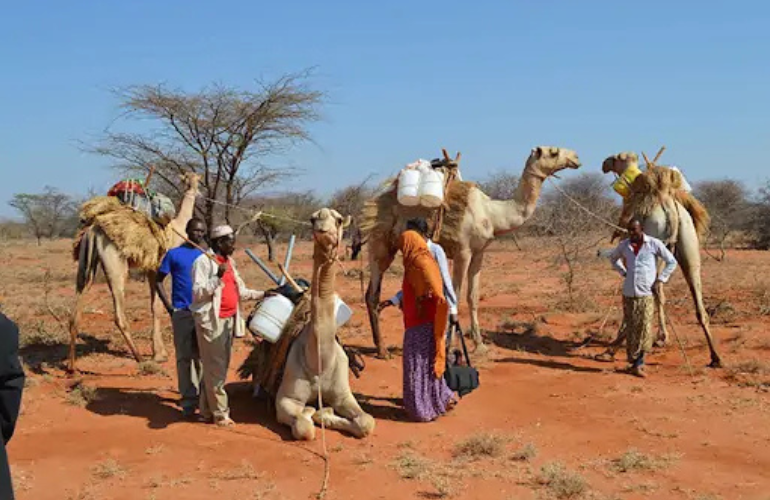
Agriculture remains the backbone of Garissa’s economy, with livestock production dominating the sector. The report shows that the county registered 89,212 livestock farmers in 2023, the highest number in the country.
Garissa recorded a total of 100,824 registered farmers, underscoring the importance of pastoralism as a key source of livelihood and economic activity, according to KNBS.
The report also highlights gradual improvements in financial inclusion. The proportion of adults with access to loans and credit increased from 29.3 per cent in 2021 to 45.8 per cent in 2024. A total of 195,790 adults in the county had access to credit in 2024, reflecting growing participation in formal and informal financial services.
However, entrepreneurial activity remains relatively low compared to many other counties. Only 37,690 adults, representing 8.8 per cent of the adult population, reported running small businesses in 2024.
According to the report, 73.7 per cent of households in Garissa own their homes, while 11.5 per cent live in rented housing. The county recorded 180,468 households during the survey period.
The KNBS report further revealed that health insurance coverage in Garissa remains among the lowest in the country. Only 7.8 per cent of residents had health insurance coverage in 2022, up from 2.7 per cent in 2015/16.
The findings highlight Garissa’s strength in livestock production while pointing to opportunities for growth in business development, financial inclusion and access to healthcare services.