
Garissa County has been challenged to shift from selling live animals to processing and value addition if Kenya is to fully unlock its KSh397 billion meat industry.
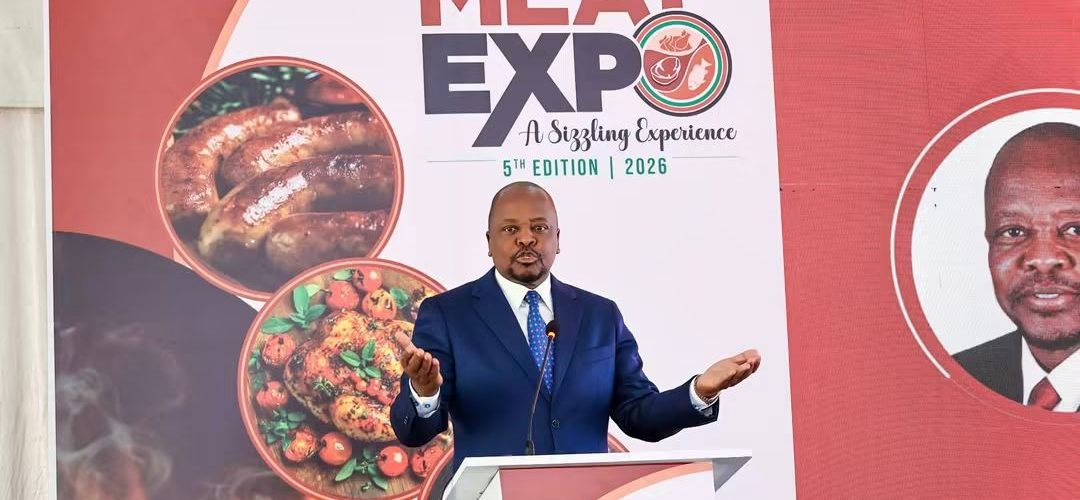
Agriculture and Livestock Development Cabinet Secretary Sen. Mutahi Kagwe issued the call on Wednesday while opening the Kenya Meat Expo 2026 at the Kenyatta International Convention Centre in Nairobi.
Kagwe revealed that Kenya’s meat sector generated an estimated KSh397 billion in 2024 from 613,627 tonnes of meat. Beef accounted for approximately 260,000 tonnes valued at about KSh160 billion, with goat meat, mutton, camel meat, poultry, pork and other products making up the rest.
He urged livestock-rich counties, including Garissa, to invest in modern slaughterhouses, cold-chain facilities, animal health systems, feedlots, improved genetics and meat processing plants.
“It is not just a question of quantity. It is also an issue of quality,” Kagwe said. Kenya has roughly 2,000 slaughter facilities, but the focus must now move to efficiency and international standards.
The Cabinet Secretary highlighted the Animal Identification and Traceability System (ANITRAC), which will track animals from origin and ownership through vaccination and movement to slaughter. The system is expected to open premium markets and strengthen efforts against livestock theft.
“Going forward, every Kenyan animal should have an identity and a traceable history,” he stated.
Kagwe also called for greater investment in water infrastructure, climate-smart production, artificial insemination, commercial feedlots and livestock insurance. He encouraged young people to view livestock as a modern business spanning breeding, processing, technology, branding and international trade.
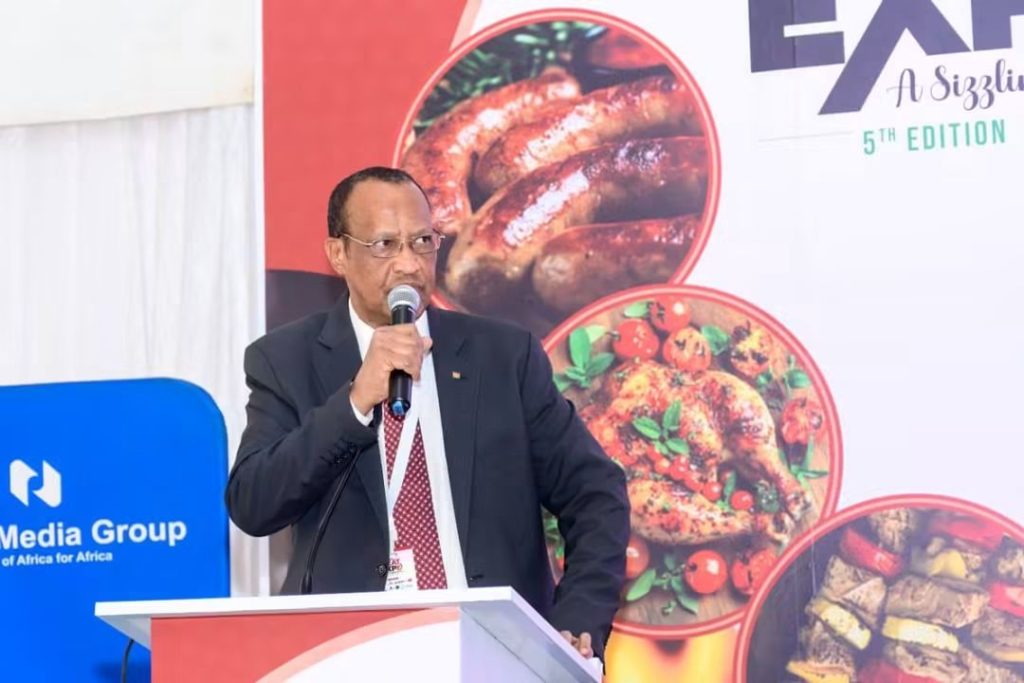
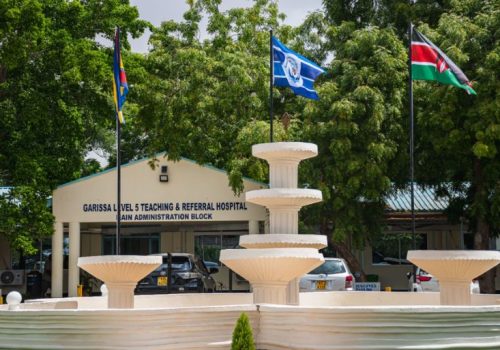
Garissa Governor Nathif Jama, who delivered the keynote address, said Kenya’s meat export ambitions must begin in the Arid and Semi-Arid Lands. ASAL counties host about 70 per cent of the country’s livestock and form the foundation of its export potential.
Jama, Chair of the ASAL Committee of the Council of Governors, stressed that Kenya must move beyond live animal exports and capture more value through aggregation, modern processing, cold-chain infrastructure, traceability and Halal certification.
“This requires deliberate investment in water and climate resilience, animal health, livestock identification and traceability, modern abattoirs, feed and finishing systems, logistics and export market development,” he said.

He called for stronger collaboration between the national and county governments alongside increased private-sector investment so that a greater share of livestock wealth remains within local communities.
Garissa’s economy remains firmly anchored on livestock. According to the Kenya National Bureau of Statistics Gross County Product report, the county registered 89,212 livestock farmers in 2023 — the highest number in Kenya. Its population is estimated at 948,974 in 2024, up from 841,353 in the 2019 census, across a vast area of 44,736 square kilometres with a density of just 19 people per square kilometre.
The Kenya Meat Expo 2026 was held under the theme “Accelerating Sustainable Growth: Empowering the Next Generation in the Meat Value Chain.”
Stakeholders underscored that turning pastoralist regions into centres of value addition will create jobs, attract investment and position Kenya as a competitive player in regional and international meat markets.