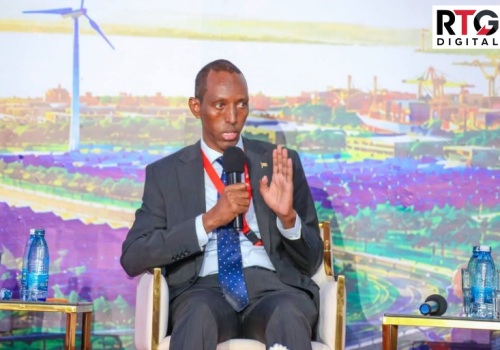

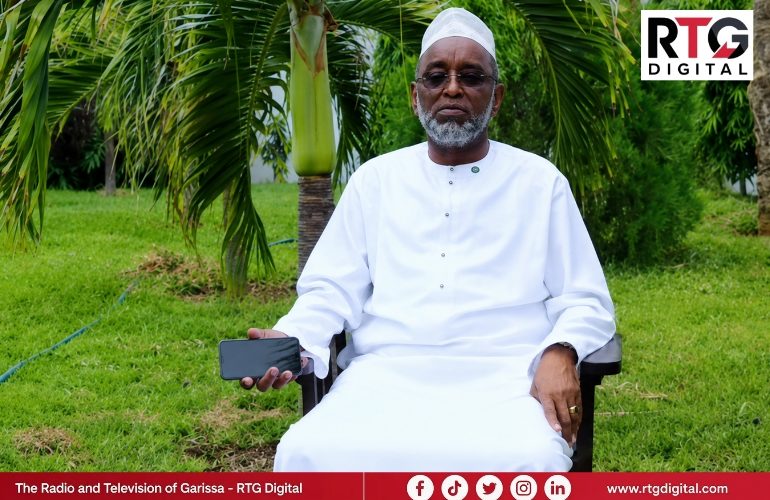
Governance and development consultant Omar Mohamed Sheikh has placed water security at the centre of his bid for the Wajir governorship. He said reliable access to clean water should become the county’s foremost development priority.
The 2027 gubernatorial aspirant says Wajir’s recurring water shortages require long-term planning rather than emergency interventions.
He has pledged to expand water infrastructure through strategic investment in boreholes, water pans, small dams, rainwater harvesting systems and distribution networks serving both urban centres and remote settlements.
“Wajir has the potential to overcome its water challenges through proper planning, professional management and equitable investment,” Omar said.
“Every family deserves reliable access to safe water regardless of where they live.”
Water remains one of Wajir County’s most pressing development challenges. Residents in many parts of the county continue to depend on seasonal water sources, water trucking and long-distance travel to access clean water, particularly during prolonged dry seasons.
Livestock, the backbone of the county’s economy, is also heavily affected whenever water sources dry up.
Dr Omar says his experience in managing large-scale development programmes has prepared him to tackle these challenges if elected governor.
He previously served as Managing Director and Chief Executive Officer of the Ewaso Ng’iro North Development Authority (ENNDA), a state corporation mandated to plan, coordinate and implement development projects across the Ewaso Ng’iro North River Basin.
Established in 1989 under the Ewaso Ng’iro North River Basin Development Authority Act (Cap. 448), ENNDA is one of Kenya’s six regional basin development authorities.
Its responsibilities include water resource development, irrigation, catchment conservation, climate resilience and implementation of integrated regional development projects.
During his tenure, Omar oversaw programmes aimed at promoting sustainable natural resource management and socio-economic development — experience he says would help strengthen Wajir’s approach to water planning and climate adaptation.
Holding a Master of Science in Agriculture and Rural Development, a Bachelor’s degree in Agriculture and a Diploma in Range Management, Omar argues that Wajir’s water crisis should be addressed through evidence-based planning linked to environmental conservation and sustainable land management.
His proposals include drilling and rehabilitating strategic boreholes, constructing water storage facilities, expanding rural water supply systems, protecting water catchments and investing in rainwater harvesting infrastructure for public institutions, including schools and health facilities.
He also says partnerships with the national government and development agencies will be essential to finance major water infrastructure projects while improving the efficiency of existing county-managed water schemes.
Water and sanitation services are among the key functions assigned to county governments under Kenya’s devolved system, making access to safe water a central issue in the forthcoming Wajir gubernatorial race.