
Garissa County Teaching and Referral Hospital is stepping up nutrition surveillance and public education as health officials push for a shift from treating nutrition-related illness to preventing it.
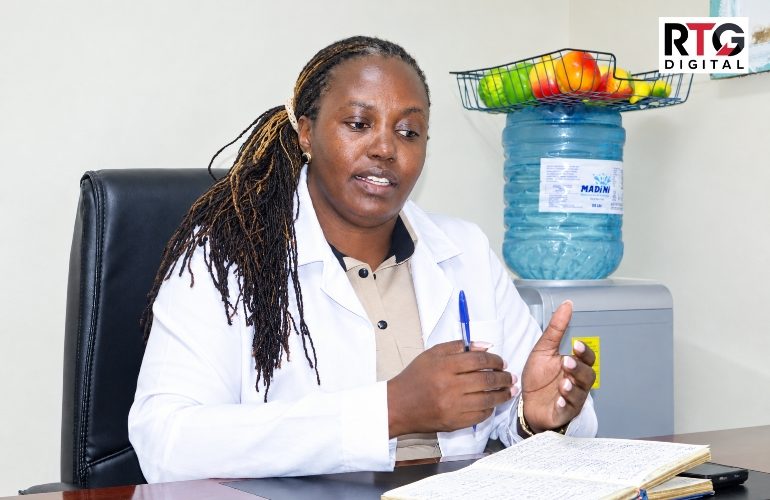
Florence Gitumbo, the hospital’s nutrition in-charge, said reliable information on what people eat is critical to identifying emerging risks, guiding interventions and shaping policies that respond to the needs of local communities.
“Monitoring dietary patterns helps us understand what people are eating, identify gaps and recognise nutrition risks early enough for appropriate interventions,” said Gitumbo.
She said nutrition must be integrated into routine healthcare rather than addressed only when patients present with malnutrition or other diet-related conditions.
The hospital serves children, pregnant women, adolescents, adults and older people, placing it in a strategic position to identify dietary challenges and strengthen prevention through routine assessments, counselling and health education.
According to the World Health Organization (WHO), low-burden tools and standardised measures can support population-level monitoring of dietary intake, allowing countries to collect data more frequently and compare trends over time.
Florence Gitumbo said such evidence should help health facilities move beyond treating individual cases and contribute to prevention, planning, research and policy.
𝐁𝐞𝐲𝐨𝐧𝐝 𝐭𝐡𝐞 𝐜𝐥𝐢𝐧𝐢𝐜
As a major referral facility serving Garissa and neighbouring counties, the hospital has a role that extends beyond treating patients who arrive at its doors, she said.
Its nutrition team works with doctors, nurses and other health professionals to identify diet-related risks and provide counselling as part of routine care.
“Nutrition affects almost every aspect of health. It is therefore important that it is integrated into routine healthcare and not treated as an isolated programme,” Florence said.
She said nutrition counselling should also reach patients who seek treatment for other conditions, as dietary and lifestyle changes can support recovery and reduce the risk of future complications.
The approach is increasingly important as communities face both undernutrition and diet-related non-communicable diseases.
Florence said prevention also requires health workers to take nutrition messages beyond the hospital through outreach, maternal and child health services and collaboration with community health promoters.
𝐏𝐨𝐥𝐢𝐜𝐢𝐞𝐬 𝐦𝐮𝐬𝐭 𝐝𝐞𝐥𝐢𝐯𝐞𝐫
She said collecting dietary data would have little value unless the findings lead to action.
Food choices are influenced by income, affordability, availability, culture, knowledge and access to markets, making nutrition a responsibility that extends beyond the health sector.
Florence called for stronger collaboration between health, agriculture, education and social protection agencies to ensure food and nutrition policies are implemented effectively.
“Having a policy is not enough. We need to know whether it is being implemented, whether it is reaching the intended population and whether it is producing the desired health outcomes,” she said.
The WHO’s Global Database on the Implementation of Food and Nutrition Action (GIFNA) tracks food and nutrition policies and actions worldwide, providing information that can help monitor implementation and identify gaps.
Florence said the same focus on implementation should be applied at county and community levels.
𝐂𝐨𝐦𝐦𝐮𝐧𝐢𝐭𝐢𝐞𝐬 𝐜𝐞𝐧𝐭𝐫𝐚𝐥
She said families, schools, community health promoters, religious leaders and local leaders must remain central to improving dietary practices.
Nutrition messages, she said, should be practical, culturally appropriate and realistic about what households can afford.
“Communities need information that enables them to make healthier choices using foods that are accessible and affordable,” she said.
The hospital can support this through health talks, counselling, community outreach, professional training and partnerships with county and national authorities.
Florence said stronger nutrition surveillance would allow health authorities to identify problems earlier, target resources more effectively and design interventions suited to specific communities.
She also called for investment in nutrition professionals and frontline health workers who can collect, interpret and use data to guide action.
“When we identify nutrition problems early, educate communities and support healthy practices, we are investing in prevention and reducing the likelihood of people developing serious health problems later,” she said.
Florence said Garissa Referral Hospital would continue to contribute through clinical care, nutrition counselling, health education, data generation and collaboration with other stakeholders.
She urged planners to use evidence to ensure that food and nutrition policies move beyond paper commitments and deliver measurable improvements in the health and wellbeing of communities.