
Members of the East African Legislative Assembly (EALA) have called for stronger regional action to eliminate female genital mutilation (FGM), warning that the harmful practice requires a coordinated response across national borders.
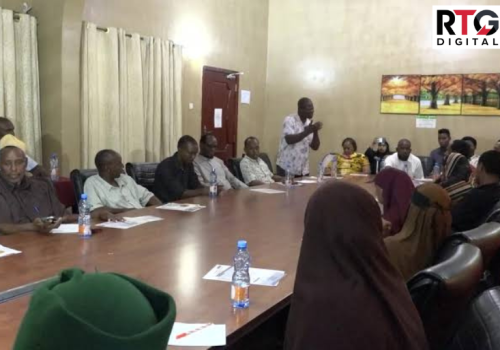
The call was made during a public participation forum in Mogadishu on the East African Community Elimination of Female Genital Mutilation Bill, 2025, which seeks to establish a common regional framework for preventing FGM, protecting girls and women at risk, and supporting survivors.
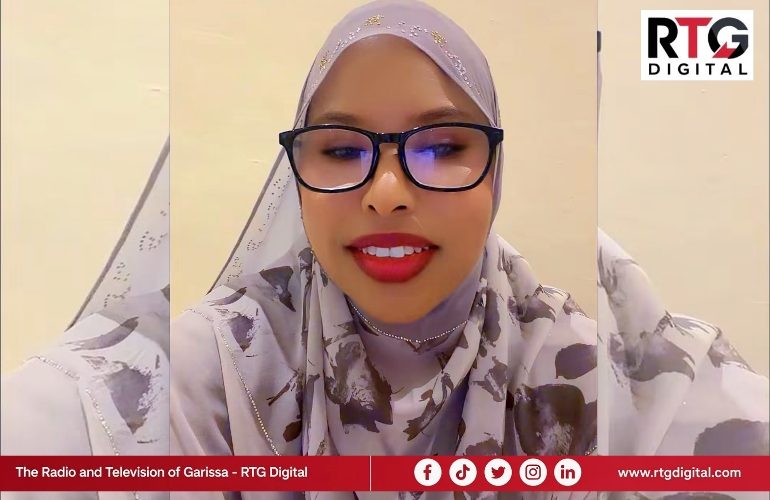
EALA Member Falhada Dekow Iman, one of the sponsors of the Bill, said the fight against FGM should not be framed as an attack on culture or on communities where the practice has traditionally been observed.
“I stand before you today not to condemn any community or attack anyone’s culture, but to stand for the protection, dignity, health, and rights of every girl and woman in our East African Community,” Falhada said.
As a woman who has not undergone FGM, Falhada said her experience is evidence that a girl can grow into a complete, healthy, dignified, and successful woman without being subjected to the practice.
“Eradicating FGM is not a war against our culture; it is a fight for the dignity, health, safety, and future of every girl and woman in East Africa,” she said.
She challenged communities to critically examine traditions that expose girls to harm, saying cultural heritage should preserve life and human dignity.
“Can a tradition be more important than the safety, health, and future of our daughters?” she asked.
Falhada acknowledged that East Africa’s cultures are rich and worthy of preservation, but stressed that culture should never become a justification for practices that cause harm.
The proposed legislation seeks to address one of the major challenges in combating FGM — its cross-border nature.
Falhada said perpetrators can exploit differences in national laws and enforcement by moving girls across borders to undergo FGM, making a coordinated EAC response essential.
“FGM is not confined by borders. Where one country acts alone, perpetrators may exploit weaknesses across borders. That is why we need a strong regional framework under the East African Community,” she said.
She said girls should receive equal protection regardless of where they live within the region, including Kenya, Uganda, Tanzania, Rwanda, Burundi, South Sudan, the Democratic Republic of Congo, and Somalia.
The Bill proposes cooperation among EAC Partner States in monitoring and surveillance of borders and in reporting progress towards the elimination of FGM.
It also requires each Partner State to designate a focal point to spearhead initiatives aimed at eliminating the practice.
The proposed law would further empower courts to issue protection orders for girls and women at risk and require Partner States to provide treatment, legal, and psychosocial support to victims.
Falhada appealed to parents, religious leaders, elders, women, men, and young people to participate in changing attitudes towards FGM through dialogue and education.
“I appeal especially to parents, religious leaders, elders, women, men, and young people: let us choose dialogue over silence, education over misinformation, and protection over harmful practices,” she said.
She also sought to reassure communities concerned that the legislation could undermine their cultural identity.
“To those who fear that this Bill is an attack on culture, I say: No. This Bill is an investment in our daughters,” Falhada said.
She said the legislation would protect girls who may not have the ability to speak for themselves and support mothers who want to protect their daughters but face pressure from their communities.
Falhada said communities should continue to preserve positive cultural values such as respect, morality, family, and community while rejecting practices that cause physical and psychological harm.
The Bill takes a zero-tolerance approach to FGM, recognising the practice as a violation of fundamental rights, including the right to health, life, physical integrity, non-discrimination, and freedom from cruel, inhuman, or degrading treatment.
Falhada said legislators and other leaders have a responsibility to protect future generations, arguing that the role of leadership extends beyond preserving traditions to addressing practices that harm vulnerable members of society.
“As legislators and leaders, we have a duty not only to represent the traditions of yesterday but also to protect the generations of tomorrow,” she said.
“History will judge us by whether, when we had the opportunity to protect vulnerable girls, we chose courage over convenience.”
The East African Community Elimination of Female Genital Mutilation Bill, 2025 is anchored in regional, continental, and international commitments to eliminate FGM, including the EAC Gender Policy, the Protocol to the African Charter on Human and Peoples’ Rights on the Rights of Women in Africa, and Sustainable Development Goal 5.3, which targets the elimination of FGM globally by 2030.
Falhada and fellow EALA Member Jacqueline Amongin are listed as members sponsoring the Bill in the memorandum published in the EAC Gazette on 1 July 2025.
Falhada urged East Africans to support the proposed regional framework and work collectively to ensure that national borders do not become avenues for evading laws against FGM.
“I therefore urge the people of East Africa to embrace and support the EAC Anti-FGM Bill,” she said.
“Let us unite across borders and across communities and say with one voice: no girl should suffer in the name of tradition, no child should lose her dignity in silence, and no border should become an escape route from the law.”
She called for a future in which communities preserve the best aspects of their cultural heritage while protecting girls from harmful practices.
“An East Africa free from FGM is not a dream beyond our reach. It is a responsibility we must embrace together,” Falhada said.