
President Hassan Sheikh Mohamud’s opposition to calls for a broad national political dialogue during the recent summit of African Union Support and Stabilisation Mission (AUSSOM) troop-contributing countries has highlighted growing tensions between Somalia’s security needs and its unresolved political disputes.
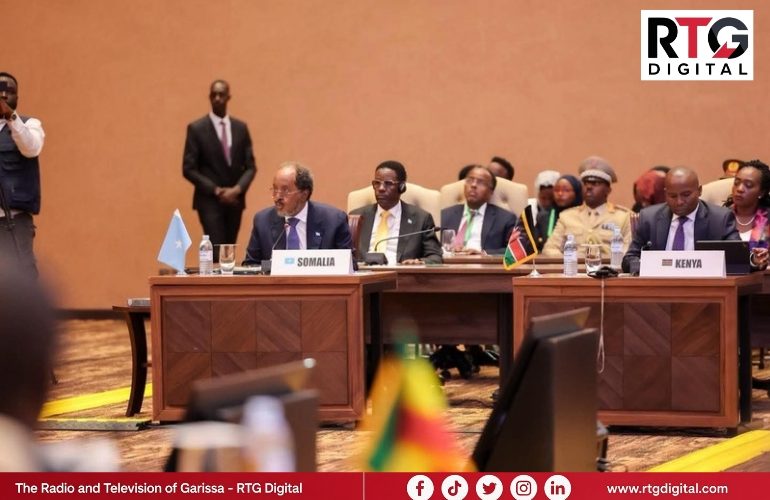
At the extraordinary AUSSOM summit held in Kampala, Uganda, from July 29 to 31, regional leaders and troop-contributing states urged Somalia’s political stakeholders to engage in inclusive dialogue aimed at resolving outstanding governance and constitutional issues.
President Hassan Sheikh reportedly objected to the inclusion of the recommendation in the final communiqué, arguing that internal political matters should remain outside the mandate of a security-focused summit. However, the appeal for dialogue remained part of the final document, underscoring the position of regional partners that long-term security is inseparable from political stability.
The development comes at a critical time for Somalia, where military operations against the militant group Al-Shabaab continue to rely heavily on the support of AUSSOM forces from Uganda, Kenya, Ethiopia, Djibouti and Burundi. These countries have provided troops, resources and logistical backing for nearly two decades in support of Somalia’s state-building efforts.
Regional partners increasingly argue that military gains can only be sustained if accompanied by political consensus among Somalia’s federal institutions, member states and opposition groups. They maintain that unresolved political disagreements risk undermining progress achieved on the battlefield.
Debate over political legitimacy has intensified following constitutional amendments extending the terms of the presidency and parliament from four years to five years, moving the next elections to May 2027. Opposition leaders have challenged the move, saying it requires broader consultation and consensus among stakeholders.
Several rounds of mediation have failed to produce an agreement, while political disagreements between the federal government and opposition figures have continued to shape public debate.
At the same time, AUSSOM faces increasing financial pressure. International partners are seeking sustainable, long-term funding mechanisms for the mission amid uncertainty over future support arrangements. Troop-contributing countries have repeatedly stressed that security investments must be accompanied by political reforms that strengthen institutions and public trust.
Analysts note that Somalia’s partners are increasingly linking security cooperation with efforts to promote dialogue, reconciliation and inclusive governance. They argue that addressing political differences through negotiation remains essential to ensuring lasting peace and preventing instability.
The Kampala summit signals that regional states view political consensus as an important pillar of Somalia’s security strategy. Whether the federal government and opposition actors can find common ground may shape the future of both political stability and international support for the country’s security institutions.