The United Nations High Commissioner for Refugees (UNHCR) and Danish partners have strengthened healthcare and water services in Kakuma Refugee Camp, supporting efforts to integrate refugees and host communities into Kenya’s national systems.
The three-year partnership involving the Novo Nordisk Foundation, Grundfos Foundation and UNHCR, in collaboration with the Kenyan government, has contributed to improved health facilities, access to clean water and the gradual integration of refugee-hosting areas into local government structures.
The initiative has also supported Kakuma’s transition towards municipal status, enhancing its recognition as an urban centre with improved governance, planning and service delivery.
More than 330,000 people live in Kakuma, one of the world’s largest refugee settlements, with residents originating mainly from Sudan, Ethiopia, the Democratic Republic of Congo and Somalia.
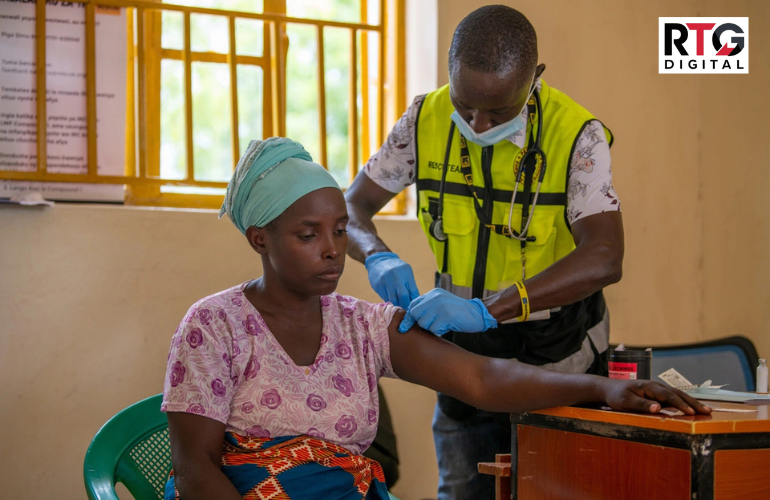
Under the partnership, dedicated clinics for non-communicable diseases (NCDs) have been renovated or established across six health facilities. The improvements include better medical equipment, additional qualified healthcare personnel, reliable power supply, clean water and improved sanitation.
The programme has also trained refugees as Community Health Promoters to support patients living with conditions such as diabetes and hypertension.
Rahmo Muktar, a Somali refugee who has lived in Kakuma and worked as a Community Health Promoter since 2010. She supports patients with chronic illnesses while helping her 22-year-old daughter, Hani Abass Osman, manage diabetes.
Rahmo said the training had improved her understanding of disease management and enabled her to support other community members in seeking timely medical attention.
The partnership has further supported refugee access to professional healthcare training through scholarships for nursing programmes at the Kenya Medical Training College (KMTC). The institution’s Turkana campus has been renovated and expanded to accommodate twice its previous student capacity.
The initiative is part of the Inclusive Refugee Response Programme, established in 2022 by the Danish Ministry of Foreign Affairs, the Novo Nordisk Foundation, Grundfos Foundation and LEGO Foundation to advance Kenya’s Shirika Plan.
The Shirika Plan seeks to transition refugee-hosting areas into integrated communities where refugees and host populations can access government-led healthcare, education, water and sanitation services, as well as employment and financial opportunities.
As part of the transition, several UNHCR-supported health facilities in Kakuma have been registered as public Kenyan health facilities and incorporated into national health monitoring and information systems. Responsibility for water and sanitation services is also gradually shifting from UNHCR to local authorities.
UNHCR Representative in Kenya Fatima Mohammed Cole said the partnership had made a tangible difference by improving access to essential healthcare and clean water for refugees and host communities.
She said the initiative reflected the government’s ambition to progressively integrate refugees into national systems and ensure sustainable access to essential services.
The partnership was implemented between 2023 and 2025, with the Novo Nordisk Foundation contributing DKK 48.8 million (approximately) and the Grundfos Foundation providing DKK 13.98 million.
Kenya hosts more than 835,000 refugees and asylum seekers, making the integration of displaced populations into public services a key component of the country’s long-term refugee response.
Kakuma, UNHCR, Refugees in Kenya, Shirika Plan, Turkana County, Novo Nordisk Foundation, Grundfos Foundation, Kenya Medical Training College, Healthcare, RTG Digital