
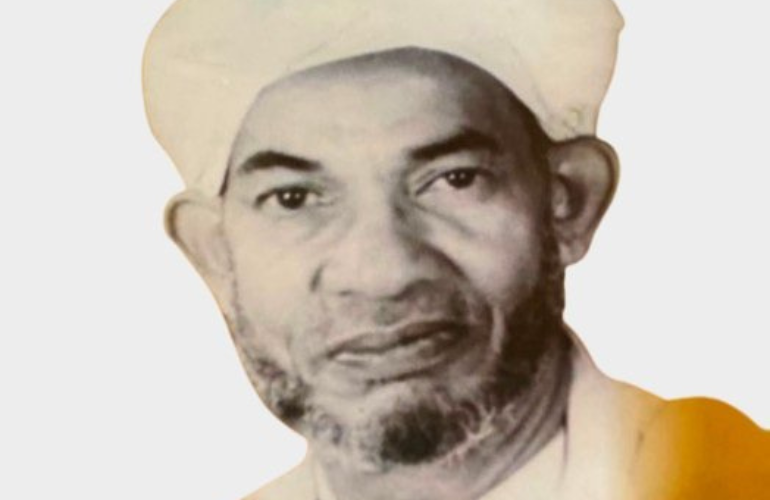
The story of formal education in Northern Kenya is inseparable from the legacy of Shariff Abubakar Omar Kullateyn, widely known as Shariff Shibly, whose pioneering work laid the foundation for modern learning across the region.
At a time when much of the former Northern Frontier District (NFD) had little or no access to formal education, Shariff Shibly introduced an approach that combined Islamic teachings with secular education, helping overcome widespread resistance to colonial-era schools among Muslim communities.
Historians credit the Zanzibar-born Islamic scholar with spearheading educational reforms that transformed learning opportunities in present-day Garissa, Wajir, Mandera, Isiolo and parts of Marsabit counties.
Bridging Faith and Modern Education
During the colonial period, most formal schools in Kenya were established and managed by Christian missionaries. Many Muslim families, particularly in Northern Kenya, were reluctant to enroll their children due to concerns that religious values would be undermined.
Recognizing the challenge, the British colonial administration sought an educator who could earn the trust of local communities while introducing modern education. Shariff Shibly, known for his scholarship in both Islamic and secular studies, was brought from Zanzibar to lead the effort.
Rather than viewing religion and formal education as competing interests, he developed a model that integrated Qur’anic studies, Arabic language and Islamic ethics alongside subjects such as English, Mathematics and other core disciplines.
The approach reassured parents that children could pursue modern education without compromising their Islamic identity.
Schools Designed for Pastoralist Communities
Understanding the realities of Northern Kenya’s nomadic lifestyle, Shariff Shibly realized that conventional day schools would not effectively serve pastoralist families who frequently moved in search of water and grazing land.
He instead championed Low-Cost Boarding Primary Schools, enabling children to remain in school throughout the academic year while their families continued seasonal migration.
The model proved highly successful and later became the basis for education strategies adopted in many arid and semi-arid regions of Kenya.
Laying the Foundation
Historical records show that in 1946 Shariff Shibly helped establish the first government primary school in the Northern Frontier District in Isiolo. The following year, formal education expanded to Garissa before reaching Wajir in 1948.
These institutions became the starting point for the growth of education across Northern Kenya, opening opportunities for generations of learners.
Many of the region’s first graduates went on to become teachers, healthcare professionals, administrators, judges, religious leaders and public servants who contributed significantly to the development of the region.
A Legacy That Endures
Education experts say Shariff Shibly’s greatest achievement was changing public attitudes toward schooling by demonstrating that Islamic values and formal education could complement each other.
His integrated education model, introduced decades before similar approaches gained wider acceptance nationally, continues to influence learning institutions serving Muslim communities.
The boarding school concept he pioneered also remains central to government and partner-supported education programmes in pastoralist areas, helping children from nomadic families remain in school.
Despite his enormous contribution to Kenya’s education history, Shariff Shibly remains relatively unknown outside Northern Kenya.
Educators and historians believe that his role deserves wider national recognition for helping lay the educational foundation upon which thousands of professionals from Northern Kenya have built their futures.