
Garissa County Teaching and Referral Hospital is expanding prosthetic and rehabilitation services for amputees, offering customised artificial limbs, wheelchair support and specialised care aimed at restoring mobility and independence in northern Kenya.
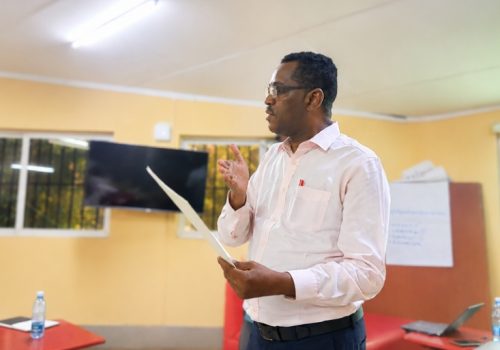
The hospital’s Head of Rehabilitative Services, Abdirizak Ahmed, said rehabilitation goes beyond simply providing an artificial limb, stressing the importance of restoring patients’ confidence and ability to participate independently in everyday life.
“Good prosthetics restore the dignity of amputees by saving them from being dependent on other people, people who are already avoiding them,” Ahmed said.
The department takes a holistic approach to rehabilitation, addressing both the physical and psychological challenges associated with limb loss.
Mr. Ahmed said many of the patients seeking services at the facility have lost limbs following road and workplace accidents, traumatic injuries or complications associated with lifestyle-related diseases.
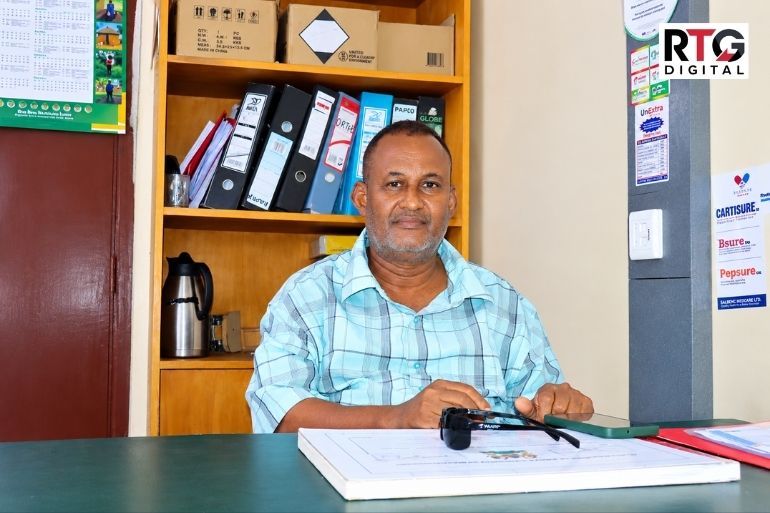
He said psychological support is an important part of the rehabilitation process, with the first visit focusing on understanding the patient, their experience and individual needs before a treatment plan is developed.
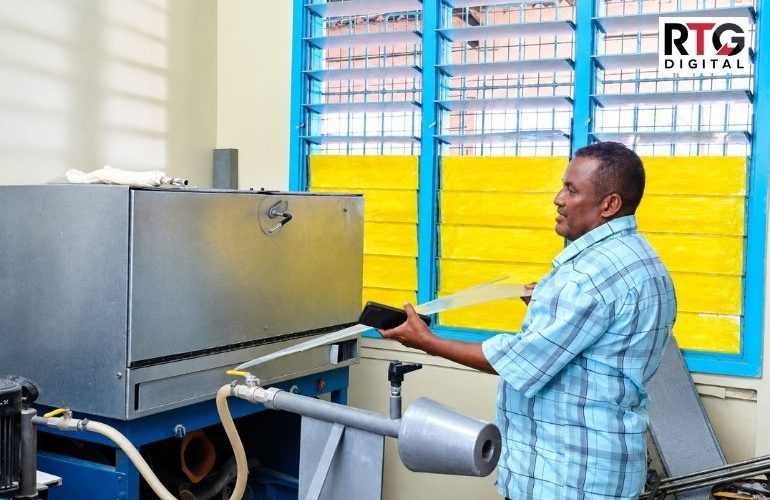
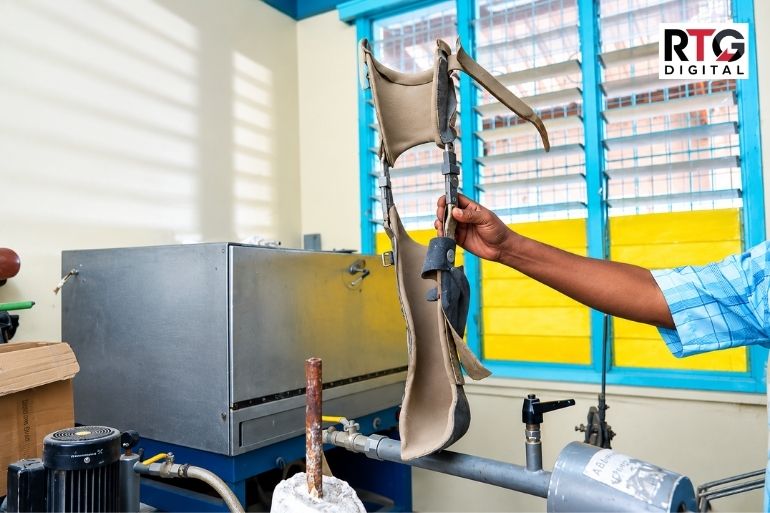
The hospital also fabricates prosthetic limbs on site, allowing specialists to customise artificial limbs and sockets for individual patients.
The fabrication process combines imported prosthetic components with locally available and recycled materials, including polypropylene, helping to keep costs manageable while enabling specialists to adapt devices to patients’ needs.
The department also provides wheelchair services, including assessment, prescription and assembly.
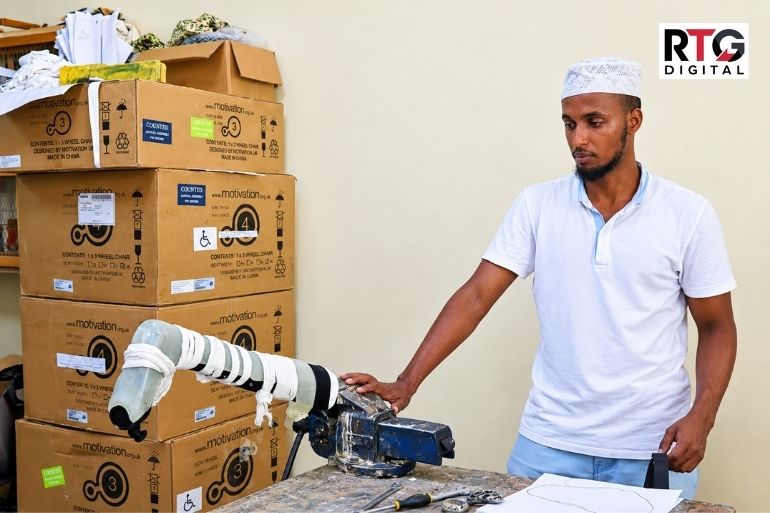
Patients can access different wheelchair options depending on their mobility requirements and living environment, including standard wheelchairs, three-wheeler models and rough-terrain wheelchairs.
The hospital is also introducing newer prosthetic technology, including the Circleg One Prosthesis, which is designed to improve movement, comfort, stability and independence among amputees.
The system uses a lightweight composite support structure and precision metal connectors, with adjustable alignment allowing specialists to customise the prosthesis for individual patients.
The technology is also designed to simplify maintenance while supporting smoother movement and reducing fatigue.
Mr. Ahmed said the combination of modern technology, locally available materials and specialist rehabilitation is strengthening services for people living with disabilities in Garissa and the wider northern Kenya region.
He said the department will continue to invest in innovation, partnerships and patient-centred rehabilitation as the hospital expands its role as a major teaching and referral facility.
For amputees, the services can provide an opportunity to return to school, employment, family responsibilities and other daily activities with greater independence.
The expansion of rehabilitative services comes as Garissa County Teaching and Referral Hospital broadens its specialist care, positioning rehabilitation as an increasingly important component of healthcare delivered closer to patients in northern Kenya.