
Aspirants vying for the governor’s seat in Garissa county are operating under one of the country’s most stringent pieces of electoral legislation: the Election Campaign Financing Act.
Enacted in 2013 and revised in 2017, the law seeks to curb the influence of money in politics, enhance transparency and prevent the misuse of public resources in one of Kenya’s most politically and security-sensitive regions.
Dedicated accounts and oversight committees required
Under the Act, all candidates – whether running under a political party banner or as independents – must channel campaign funds through dedicated expenditure accounts.
Party-sponsored candidates are required to establish a nine-member party expenditure committee that meets strict diversity criteria, including gender balance and regional representation. Independent candidates must form a smaller three-member committee.
These committees are responsible for managing finances, receiving reports from candidates, and submitting detailed expenditure returns to the Independent Electoral and Boundaries Commission (IEBC).
Strict limits on donations and spending
The law prohibits contributions from anonymous donors, foreign governments, illegal sources or public resources such as state vehicles, buildings or funds. Contributions from any single source are capped, and organisations wishing to campaign in support of a candidate must register with the IEBC, obtain consent and operate within prescribed spending limits.
The IEBC is required to gazette spending ceilings for gubernatorial contests, taking into account factors such as population size, geography and infrastructure challenges – considerations particularly relevant in the vast, arid expanses of Garissa county.
Candidates must submit preliminary nomination spending reports within 21 days of party primaries and comprehensive final reports within three months of polling day. Surplus funds must be returned to the party or directed to charitable causes.
Heavy penalties for violations
Breaches carry significant consequences. Offences including false reporting, exceeding spending limits without justification, or accepting prohibited donations can result in fines of up to 2m Kenyan shillings (£12,000), imprisonment for up to five years, campaign bans or outright disqualification from the race.
The Commission has broad investigative powers, including the ability to audit accounts and hear complaints within tight timelines.
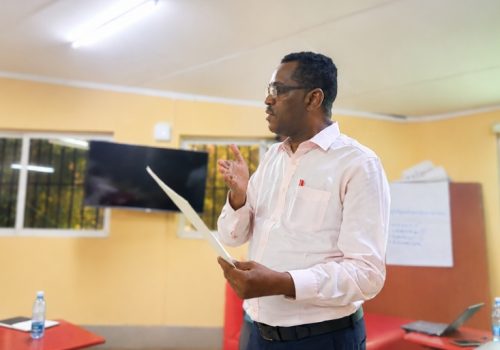
Abdirahman Yussuf, a political analyst said the rules are particularly pertinent in Garissa, where clan dynamics, resource politics and security issues have historically shaped electoral contests.
“Transparent campaign financing is essential for credible elections in marginalised regions like North Eastern Kenya,” said Mr. Yussuf, one governance expert familiar with the county’s politics.
“Voters deserve to know where the money is coming from and how it is being spent.”
The Election Campaign Financing Act remains a critical – if sometimes controversial – tool in Kenya’s efforts to reduce the role of money in politics and strengthen democratic accountability.