
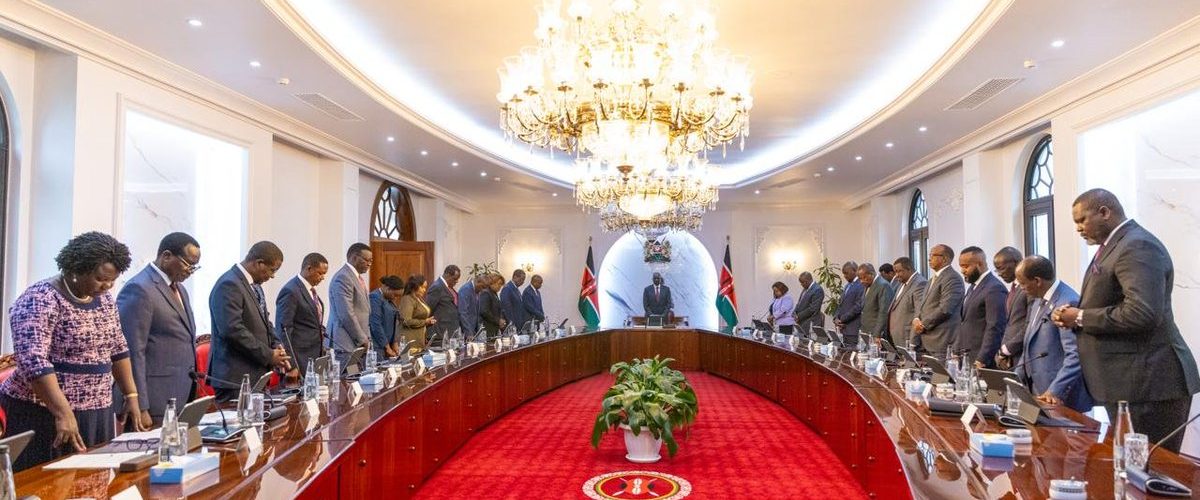
President William Ruto’s Cabinet has approved a raft of policy decisions touching on public sector reforms, infrastructure development and climate preparedness, with Northern Kenya emerging as one of the key beneficiaries through new funding for strategic road projects.
President Ruto endorsed sweeping reforms aimed at eliminating payroll fraud across government, while also approving additional financing for key road projects under the Isiolo-Mandera corridor when he chaired the meeting at State House, Nairobi, on Tuesday.
The Cabinet directed the Directorate of Criminal Investigations (DCI) to investigate payroll fraud following an audit that uncovered widespread weaknesses in government payroll systems.
According to the Cabinet, a sample audit of 12 out of 53 State Departments identified suspected payroll irregularities amounting to KSh6.2 billion, including unauthorized alterations to payroll records, irregular payments and weak oversight mechanisms.
To address the problem, the government ordered a nationwide payroll audit, migration of ministries and state agencies to a revamped Integrated Human Resource and Payroll System (IHRPS), enhanced cybersecurity, payroll data cleansing and stricter validation measures.
Boost for Northern Kenya roads
For Northern Kenya, one of the Cabinet’s most significant decisions was the approval of additional financing for the 67-kilometre Modogashe–Samatar road and the 76-kilometre Rhamu–Mandera road under the 750-kilometre Isiolo-Mandera highway project.
The government said the investment is intended to accelerate completion of the strategic transport corridor, improve connectivity, facilitate trade and enhance access to essential services across Northern Kenya while strengthening regional integration with neighbouring countries in the Horn of Africa.
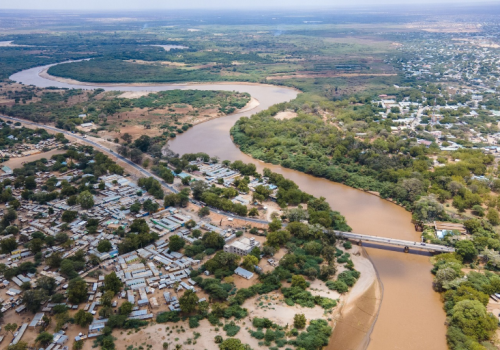
The Isiolo-Mandera road is expected to transform transport across Isiolo, Meru, Garissa, Wajir and Mandera counties by reducing travel time, lowering transport costs and improving access to markets, schools and healthcare facilities.
El Niño preparedness
Cabinet also established an Ad Hoc Cabinet Committee on El Niño Preparedness and Response, chaired by Deputy President Kithure Kindiki, to coordinate government preparations for forecast moderate-to-strong El Niño rains later this year.
The committee will oversee implementation of a national contingency plan covering flood mitigation, evacuation and shelter arrangements, drainage clearance, reinforcement of vulnerable roads and bridges, pre-positioning of emergency equipment and medical supplies, farmer advisories and establishment of a contingency fund for relief and rehabilitation.
The move is particularly significant for Northern Kenya, where seasonal floods frequently disrupt transport networks, displace communities and damage critical infrastructure.
Artificial intelligence and digital jobs
Cabinet further approved the establishment of a Standing Cabinet Committee on Artificial Intelligence to coordinate Kenya’s national AI strategy and position the country as a regional leader in responsible artificial intelligence.
The meeting also adopted the National Business Process Outsourcing (BPO) Policy aimed at attracting global outsourcing firms and creating thousands of digital jobs for young Kenyans.
Health, manufacturing and social protection
Among other resolutions, Cabinet approved:
- KSh7.8 billion for the second phase of the Kenya-Austria Mother and Child Project at Kenyatta National Hospital.
- Adoption of the Kenya Children Policy, 2025.
- Approval of the Protection Against Domestic Violence (Amendment) Bill, 2026.
- Endorsement of the Presidential Technical Working Group report on Gender-Based Violence and Femicide.
- A KSh5.8 billion Leather Value Chain Development Support Project expected to create up to 120,000 jobs.
- The National Cotton, Textile and Apparels Policy to revitalise the textile sector.
- Negotiations to modernise welding and mechanical engineering training in 10 TVET institutions.
Cabinet also approved the establishment of the Kenya Leather Development Authority, endorsed Kenya’s hosting of the Secretariat of the Alliance of African Multilateral Financial Institutions, and authorised negotiations on a long-term economic partnership with China to expand trade and investment opportunities.
The decisions remains to be understood as the government’s new God sent focus on public sector accountability, infrastructure expansion and economic transformation, with Northern Kenya featuring prominently through strategic road investments expected to improve connectivity, security, trade and regional integration.