

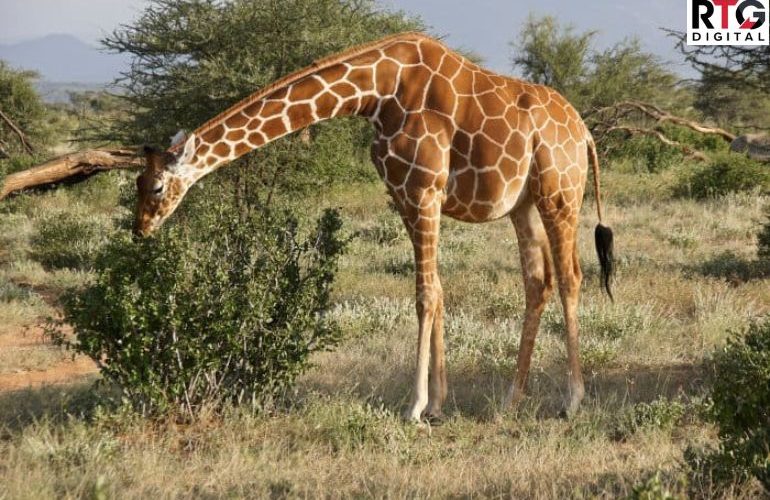
The Somali giraffe, also known as the reticulated giraffe, is quietly vanishing from the rangelands of Garissa County in what conservationists describe as a “silent extinction.”
Once a familiar sight across northern Kenya’s vast drylands, the iconic species has suffered a dramatic decline over the last three decades. According to the Somali Giraffe Project, the wild population has fallen by more than 50 percent, driven by habitat fragmentation, poaching, prolonged droughts and the growing impacts of climate change.
The decline has occurred largely out of the public spotlight. Areas that once supported thriving herds now host only scattered and isolated populations struggling to survive in increasingly fragmented habitats.
Today, only about 15,000 reticulated giraffes remain in the wild, down from an estimated 33,000 three decades ago—a decline of 56 percent. In Kenya, the population dropped by 67 percent between the 1970s and 2018, according to the National Giraffe Action Plan. Despite the alarming decline, the country’s North Eastern region remains the species’ most important stronghold. Recent wildlife census data by the Kenya Wildlife Service shows the region hosts the largest remaining population of reticulated giraffes.
Historically, the Somali giraffe ranged across southern Somalia, southern Ethiopia and northern Kenya, areas predominantly inhabited by Somali communities, from which the species derives its name. In Kenya, its range once stretched across most regions north and east of Mount Kenya, bounded by the Rift Valley to the west and the Tana River to the southeast.
However, rapid human population growth, expanding settlements, infrastructure development and increasing livestock numbers have intensified pressure on natural resources, leading to widespread habitat loss and degradation. The conversion of rangelands into farms, roads and urban centres has further fragmented the giraffe’s habitat, restricting movement and access to food and water.
Climate change has compounded these challenges. Unpredictable rainfall patterns and recurring droughts have reduced vegetation cover across northern Kenya, leaving wildlife increasingly vulnerable. The species also faces growing threats from bushmeat poaching and cross-border wildlife trafficking.
Conservationists warn that civil conflict, insecurity and terrorism in parts of the Horn of Africa have made it difficult to monitor and protect giraffe populations, particularly in remote areas. Across the border in Somalia, the status of reticulated giraffe populations remains largely unknown.
Despite hosting the majority of the world’s remaining Somali giraffes, eastern Kenya has received relatively limited conservation attention due to its vastness and inaccessibility. The Somali Giraffe Project is seeking to reverse the decline through community-based conservation, scientific research and local engagement initiatives aimed at protecting both the species and its habitat.
The project says safeguarding the future of the Somali giraffe will require stronger habitat protection, anti-poaching measures and greater involvement of local communities. Without urgent action, one of the Horn of Africa’s most recognizable wildlife species could continue its silent march toward extinction.
The disappearance of the Somali giraffe is more than a conservation concern. It is a warning about the growing environmental pressures facing northern Kenya’s fragile ecosystems and the urgent need to protect the region’s unique natural heritage before it is lost forever.