
Mohamed Adow has opened up about how his 36-year journalism career prepared him for the demanding realities of politics, describing public leadership as a relentless responsibility centred on service to the people.
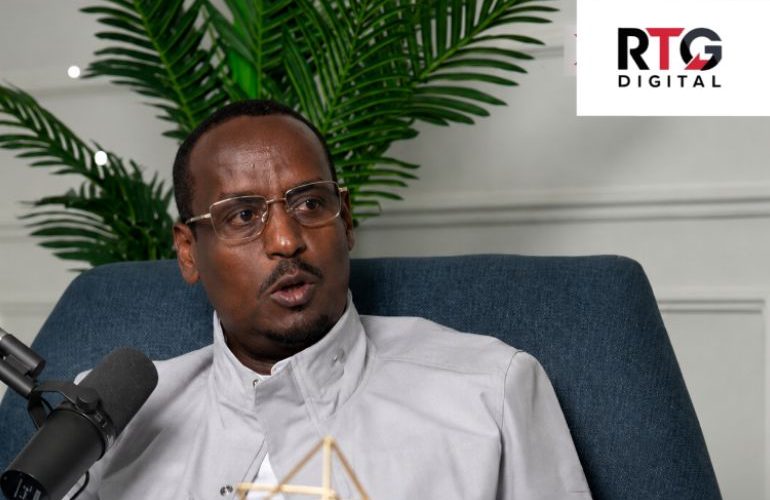
Speaking during an interview on the Kulan Podcast hosted by Harun Salat, the former Al Jazeera and BBC journalist said years in the newsroom equipped him with discipline, communication skills and crisis management experience that now guide his work as a legislator.
“Journalism was structured. Politics never stops. So long as you are awake, you are on duty,” Adow said.
The first-term MP, elected in 2022, said politics comes with constant pressure unlike journalism, where assignments eventually end and journalists get time to rest.
“Here, the chaos is constant. You are dealing with one issue after another. You have too many balls in the air at any time of the day,” he added.
Adow said one of his key campaign promises was to remain accessible to constituents, noting that years of neglect had left many residents disillusioned with elected leaders.
“It was that hopeless in the minds of many people that once you elect a leader, they never come back,” he said.
To bridge the disconnect, the MP said he travels back to the constituency at least twice every month despite its vast geographical size of about 22,000 square kilometres.
Education, he said, became his top priority immediately after taking office. According to Adow, he found schools operating with severe teacher shortages, with some institutions relying on a single teacher to handle all classes.
“You would find a whole school with only one teacher, just the principal. Some schools were operating with two or three teachers for the entire institution,” he said.
He also described children learning under trees due to lack of classrooms, while teachers were forced to end lessons early because of extreme heat.
“So many children were at risk of becoming a lost generation because there were no schools, no facilities and no teachers,” Adow stated.
To address the crisis, the legislator launched the Wajir South Teachers Scholarship Programme in October 2022, barely a month after assuming office. The initiative sponsors students pursuing diploma and degree courses in education using constituency bursary funds.
According to Adow, bursary allocations have risen steadily from Sh55 million to Sh70 million, with plans to increase the amount further due to growing demand.
He revealed that at least 77 graduates sponsored under the programme were recently employed by the Teachers Service Commission.
“We needed a sustainable solution. Instead of waiting endlessly for teachers to be deployed, we decided to train our own,” he said.
On infrastructure, Adow said his administration has overseen the construction of about 350 classrooms across the constituency through NG-CDF and donor-supported projects.
He disclosed that several secondary schools he inherited were operating within overcrowded primary school compounds without land, adequate facilities or sufficient staffing.
“I found secondary schools with only the principal watching over students. Some did not even have their own classrooms,” he said.
The MP said his office has since established 10 new secondary schools, including girls-only institutions aimed at reducing dropout rates among female students.
“Parents were uncomfortable sending girls far away for education, so we decided to establish girls’ secondary schools closer to communities,” he explained.
Adow also addressed allegations of unfair distribution of NG-CDF bursaries, insisting the process is transparent and strictly application-based.
“The allocation process is rigorous, fair and objective. We involve committee members from all wards and respected elders during verification,” he said.
He acknowledged that loopholes existed during the first year of implementation, with some applicants allegedly using guardians from Wajir South to access bursaries despite coming from other constituencies.
However, he said stricter requirements, including proof of guardianship and documentation for orphaned children, were later introduced to seal the gaps.
During the podcast interview, Adow linked the region’s education challenges to recurring drought, poverty and displacement, arguing that investment in education remains the most effective path to transforming marginalised communities in northeastern Kenya.