
A livelihood programme in Kenya’s Kakuma Refugee Camp is helping refugee families reduce their dependence on humanitarian aid by equipping them with business skills, financial literacy and poultry farming to build sustainable sources of income.
The initiative, highlighted in the 2025 East Africa Humanitarian and Emergency Affairs Report by World Vision, is promoting self-reliance among refugees at a time when humanitarian agencies are grappling with shrinking donor funding and reduced food assistance across East Africa.
The programme combines savings groups, entrepreneurship training and practical agricultural skills to enable refugee households to establish small businesses capable of supporting their families beyond emergency aid.
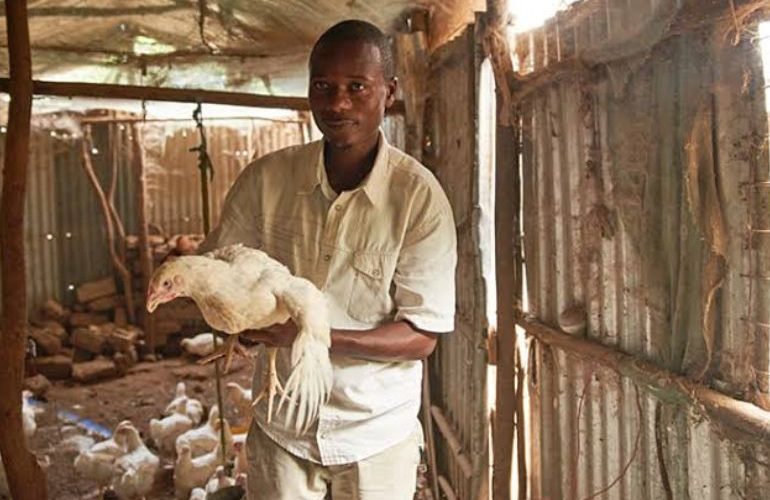
One beneficiary is Josiana, a mother of nine living in Kakuma 3, who spent years relying entirely on humanitarian assistance. In early 2025, she joined a Savings for Transformation group, where she gained access to affordable loans, financial management training, poultry farming skills and World Vision’s Empowered World View coaching programme.
Using the knowledge and financial support she received, Josiana established a small poultry enterprise that now generates income to meet her family’s daily needs.
“Before, I had nothing left after spending, but now I can plan, support my children, and still grow my poultry business,” she says in the report. She is now saving to expand her flock to 200 chickens, with hopes of increasing her household income and achieving long-term financial stability.
The initiative comes as Kenya continues to host around 850,000 refugees, many of whom have been affected by declining humanitarian funding that has forced aid agencies to reduce food rations and cut essential services. Refugee families have increasingly been encouraged to pursue livelihood opportunities that can lessen dependence on humanitarian assistance while strengthening household resilience.
According to World Vision, livelihood programmes are becoming a critical component of humanitarian response as prolonged displacement means many refugee families spend years, and sometimes decades, in camps. Building economic resilience through vocational training, entrepreneurship and financial inclusion is viewed as a sustainable complement to traditional emergency assistance.
The organisation says initiatives such as poultry farming not only improve household incomes but also contribute to better nutrition, food security and financial independence for vulnerable families. Savings groups further enable participants to access affordable credit, invest in small businesses and support one another during financial emergencies.
The report notes that humanitarian agencies across East Africa are increasingly integrating livelihood support into refugee programming as international funding continues to decline while displacement rises because of conflict and climate-related disasters.
World Vision says expanding opportunities for refugee entrepreneurship and skills development will be essential to improving self-reliance, reducing aid dependency and enabling refugees to contribute more actively to local economies while they remain displaced.